




A 90-minute pitch, rebuilt into three working surfaces.
Intel has guided technology through every major era of modern computing — Industrial Age, Information Age, and now AI. The design challenge: take a one-room argument about partnership and make it portable. Three surfaces carry the same conviction across film, microsite, and phone — a 90-minute presentation rebuilt into something readers can hold, share, and re-enter for months.
I led the work across all three — narrative, motion, interaction system, brand application. The film carries the argument with sound; the microsite stays open for revisits; watsonx Live, the mobile prototype, makes the thesis demonstrable on a phone. Same conviction across surfaces; each surface earns its own job.
The film opens by compressing Intel’s whole pitch into a few seconds of moving type. The two eras Intel already defined — the Industrial Age and the Information Age — share one set of initials: IA. The morph resolves them into the era Intel is pitching now: IA, IA → AI, the Age of Ingenuity — the brand’s own history spelling its future, made in a single transformation of type.
That overture opens a two-minute narrative film that was its own part of the experience — the piece that set the tone of the partnership before a word of the pitch was spoken, score and voiceover and motion making the AI era feel like something to act on. Seize this moment.
A history that spells its future.
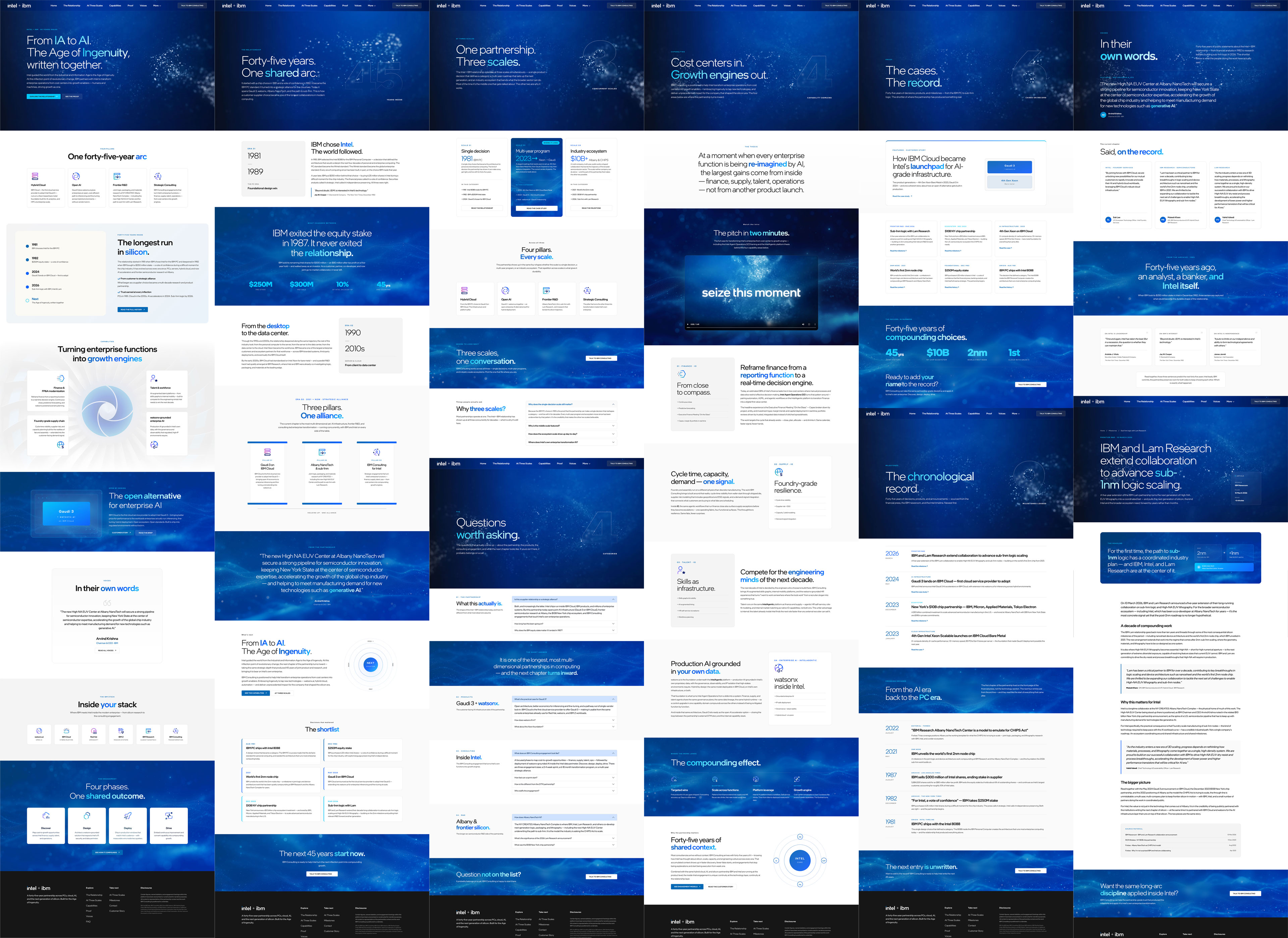
What lives in a 90-minute presentation deserves somewhere to be re-read, shared, and returned to. The IBM × Intel microsite is that home — an editorial site that takes the same argument, the same partnership chronology, the same four capability domains, and gives them an address.
Forty-five years of partnership history — sub-1nm logic, High-NA EUV, the Albany Nanotech work, Xeon-on-Cloud — each get their page. The opening film embeds inside the capabilities page; named voices and proof points sit a click away. The same typography, color, and eased motion carry from the room to the browser.
An argument you can revisit.
If the microsite is the argument’s permanent home, the prototype is the demonstrable thesis in someone’s hand — in a meeting, on a data-center floor, anywhere a partner needs to try the case in their hands.
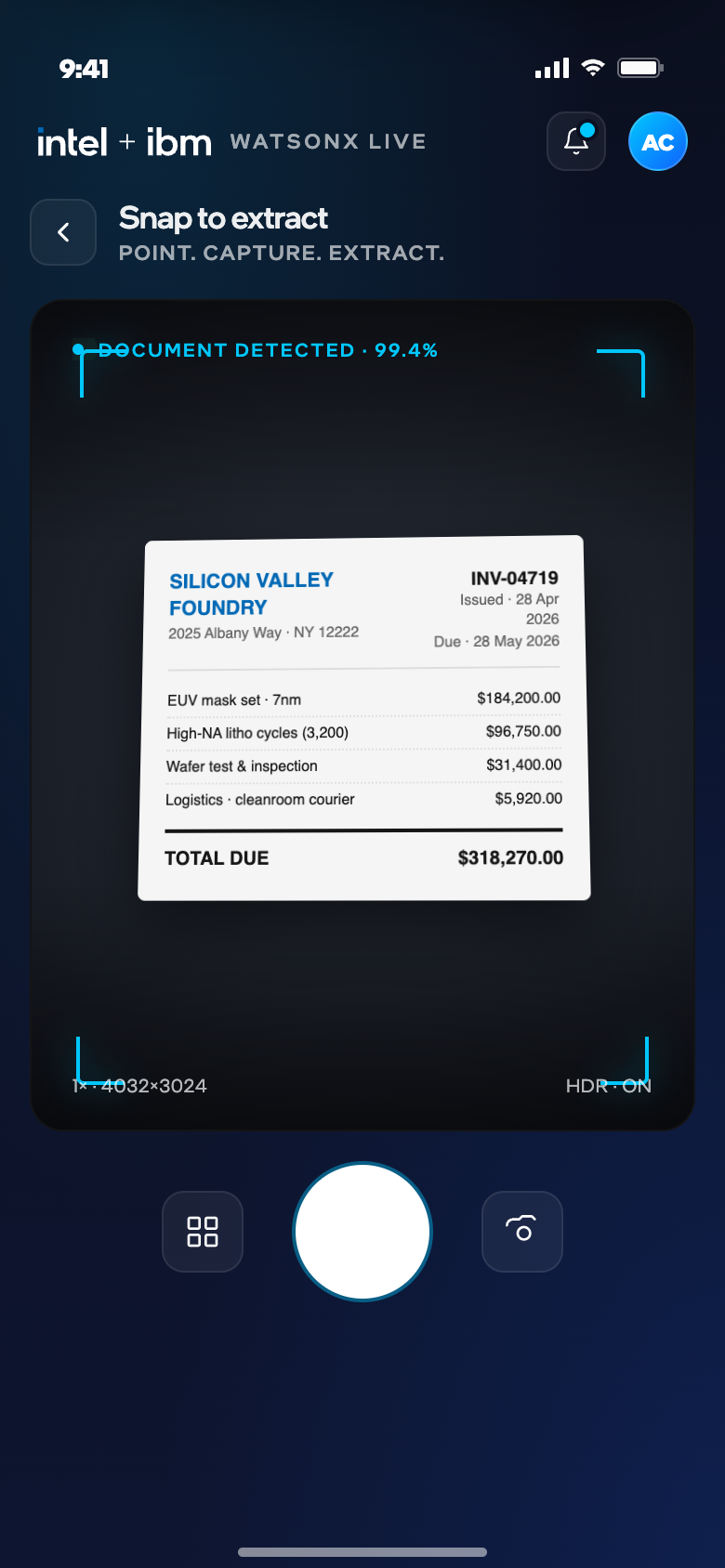
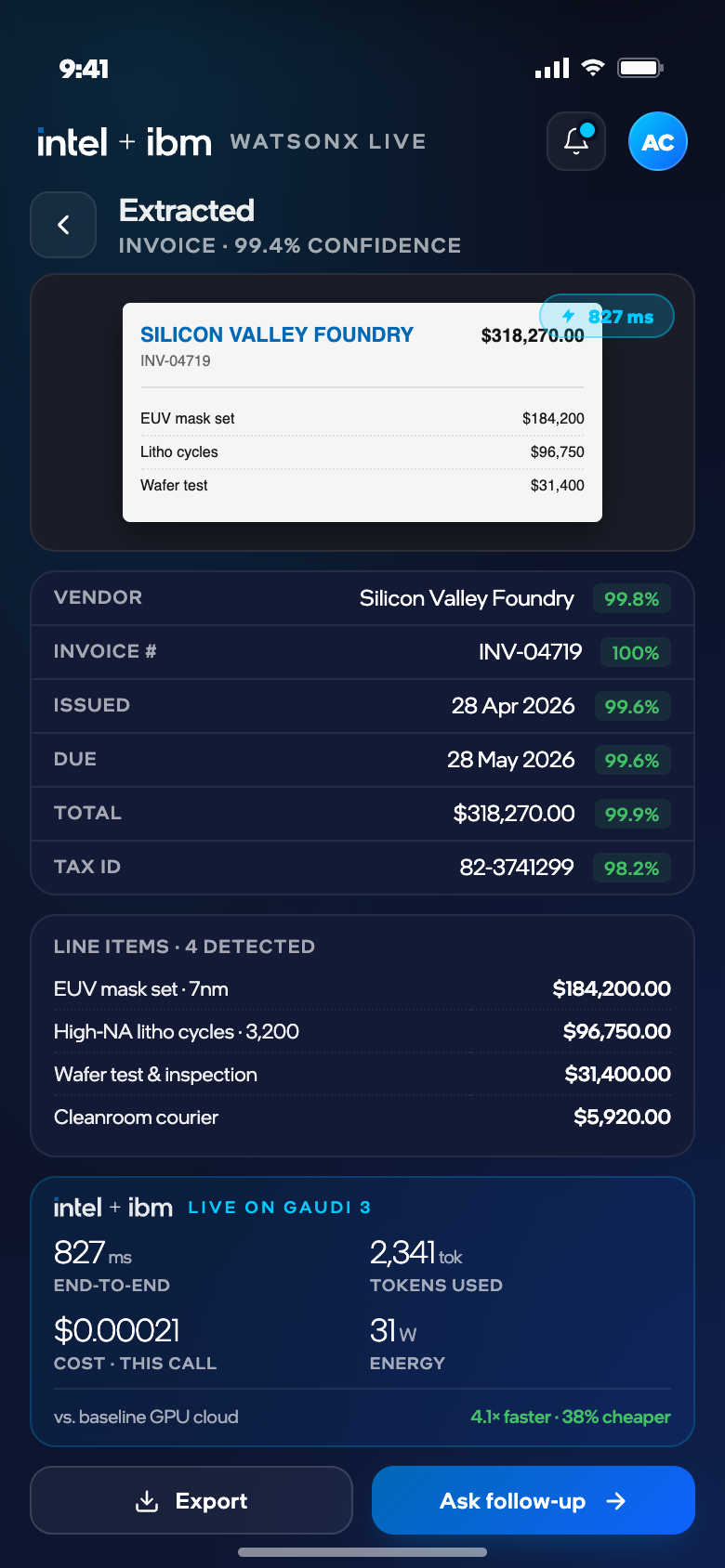
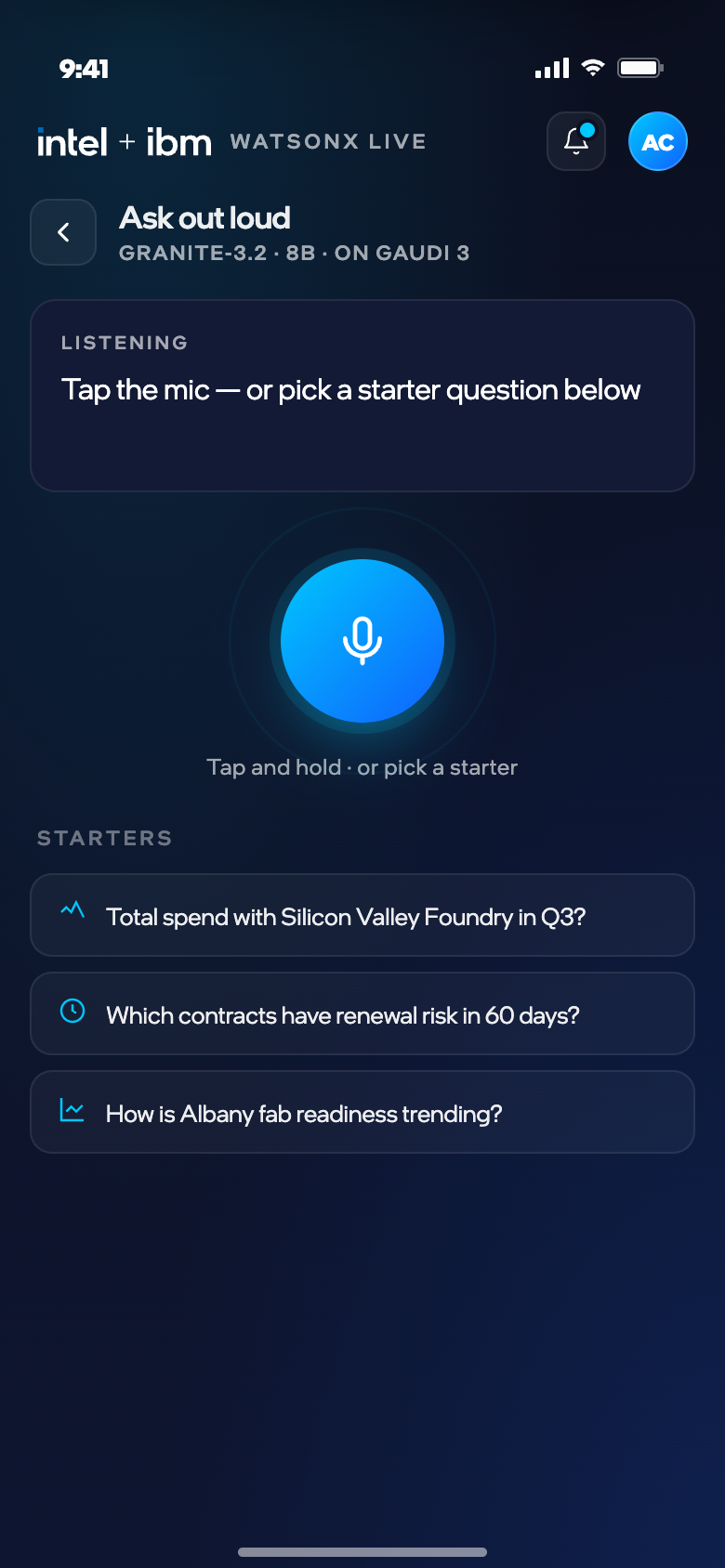
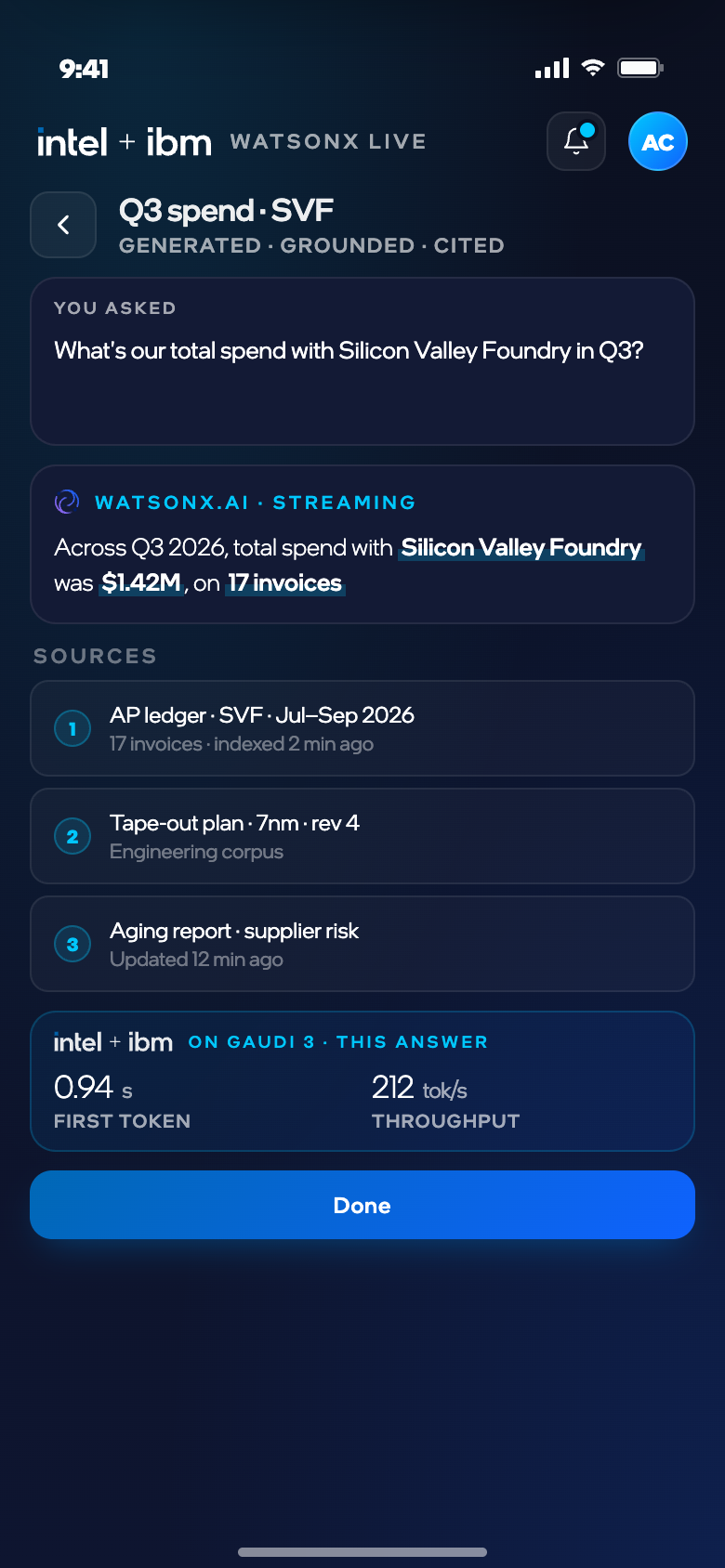
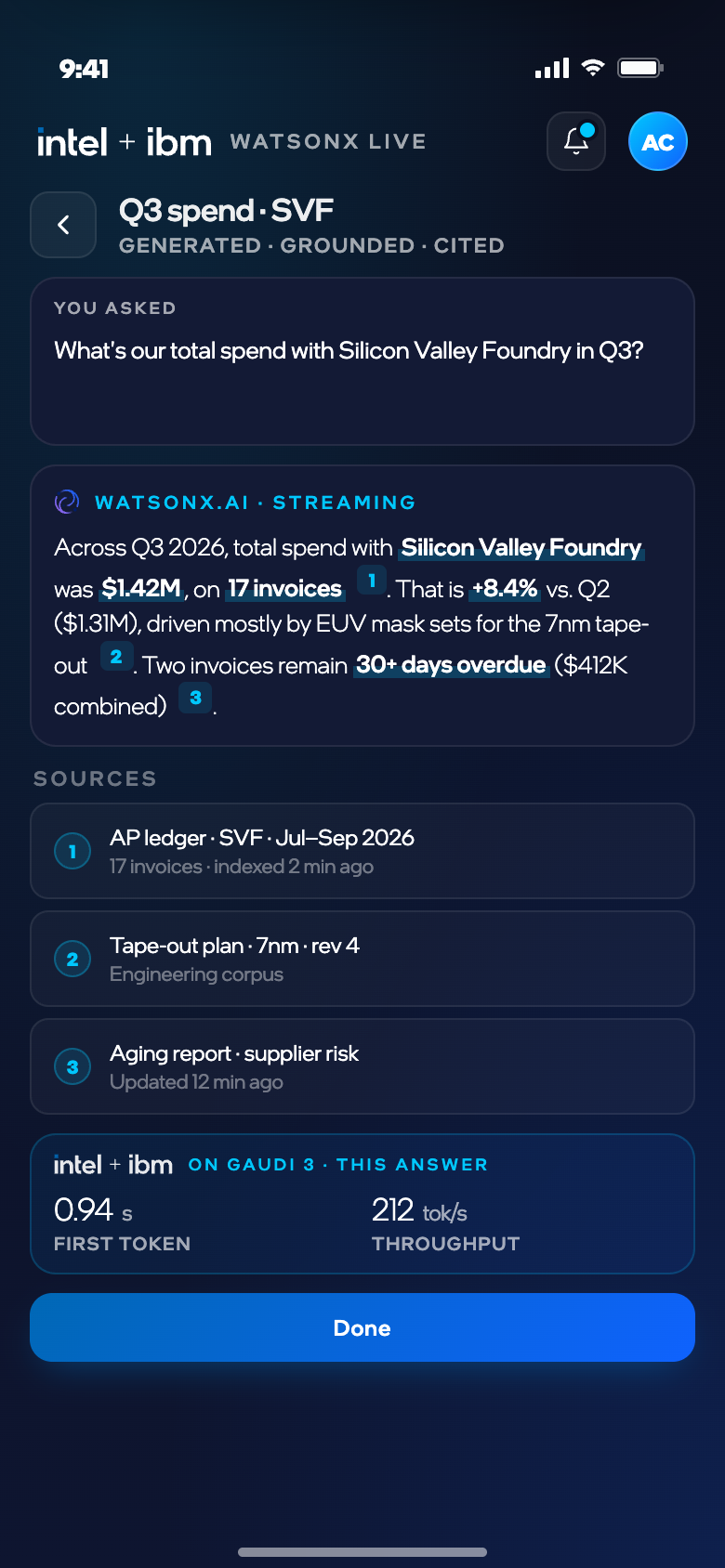
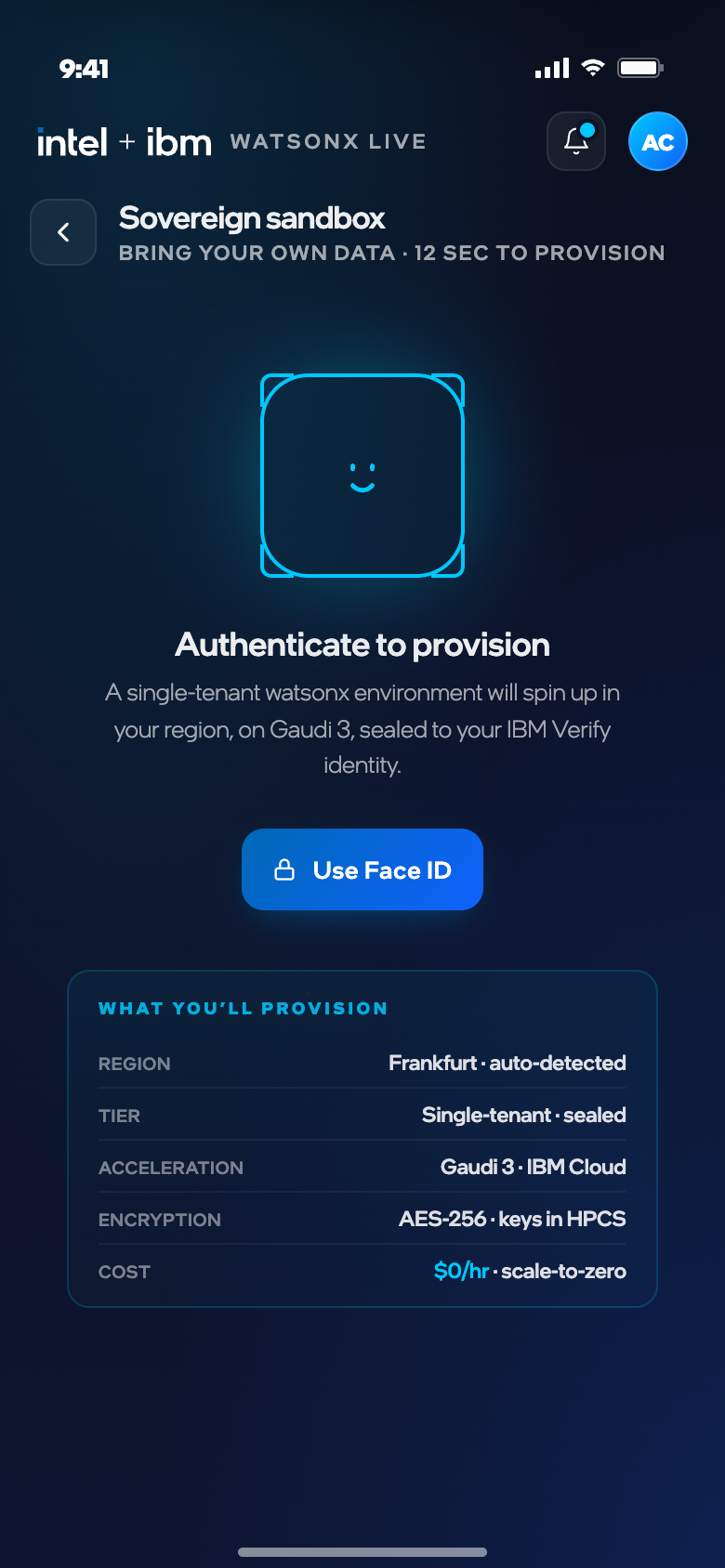
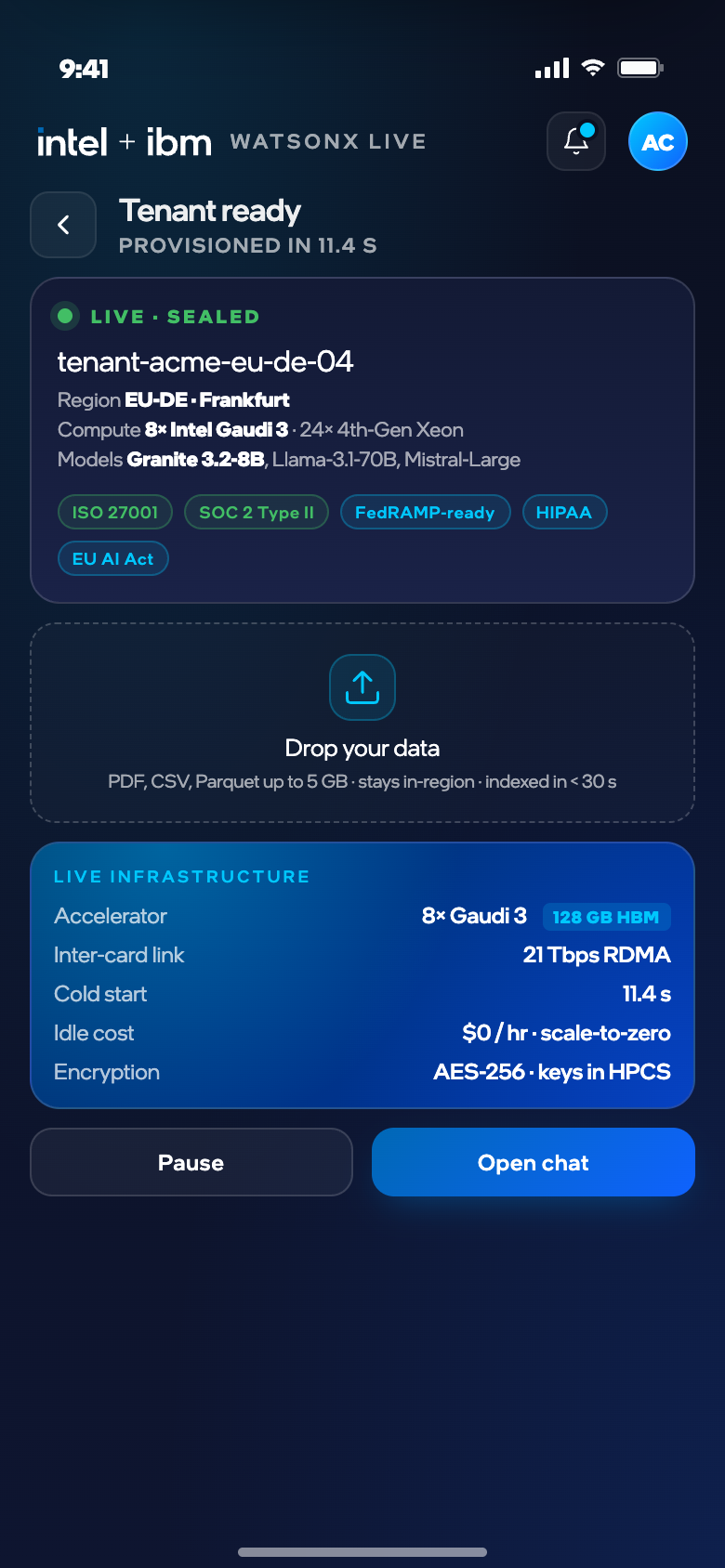
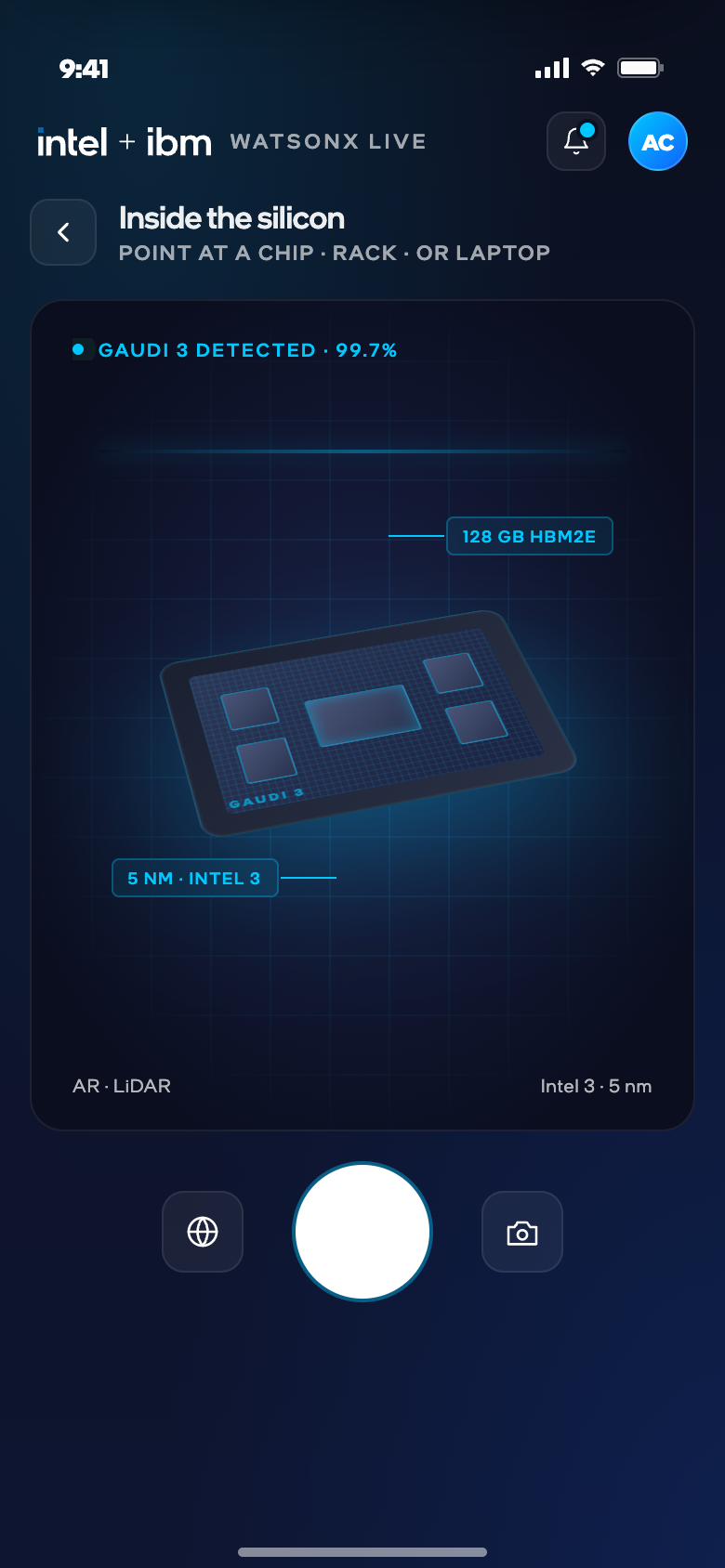
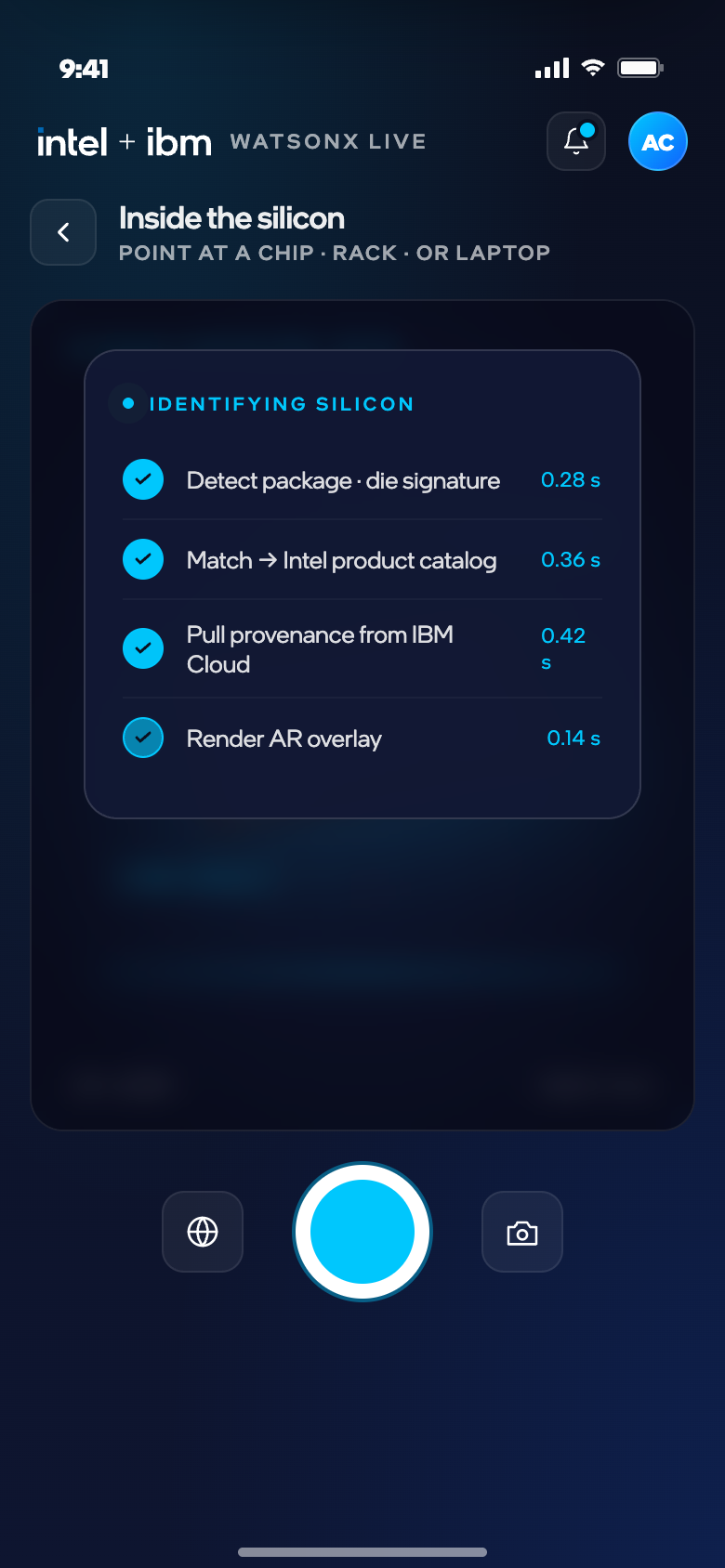
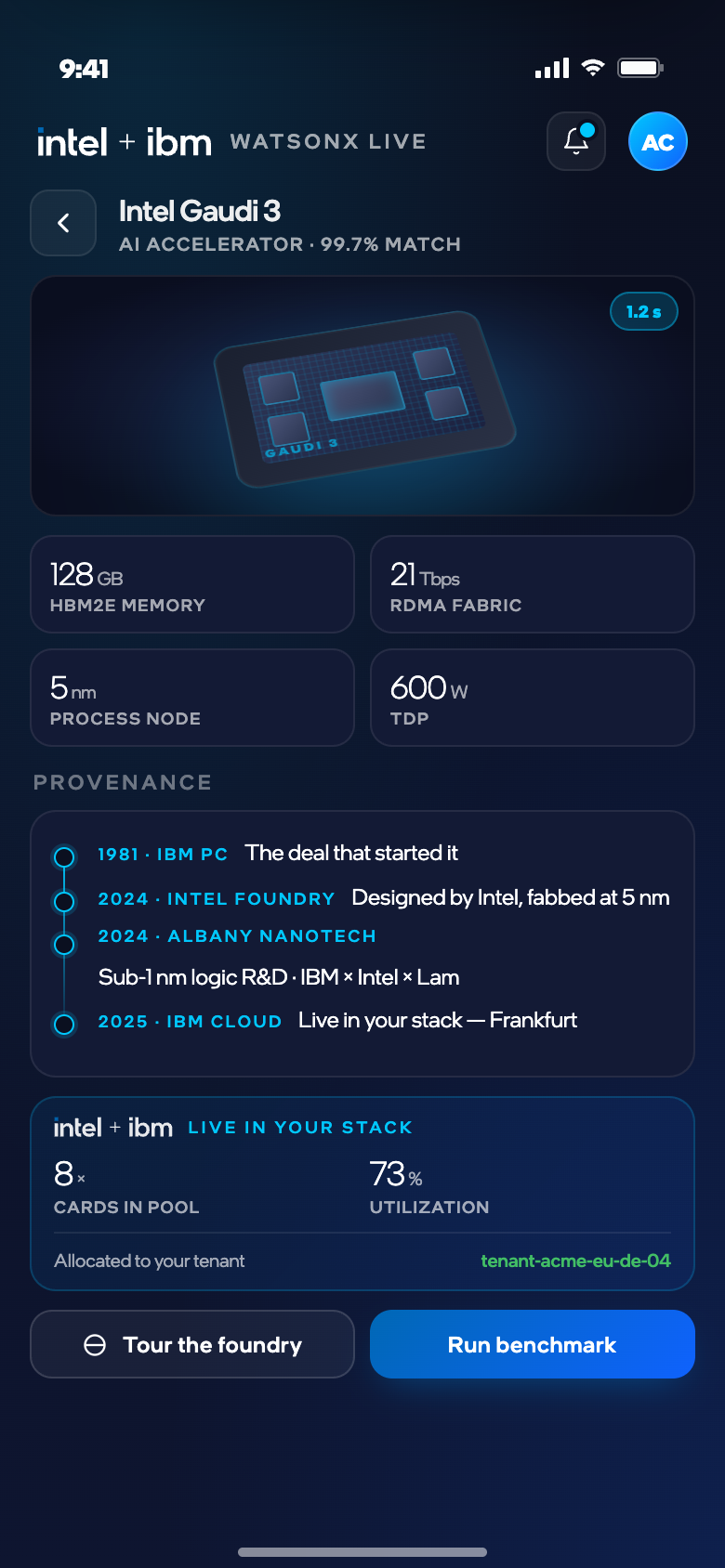
watsonx Live is a clickable mobile prototype where each capability becomes something a partner can actually do — snap an invoice and structured fields come back, ask Granite and cited sources stream in, provision a sandbox and feel what a rollout would feel like. The moment that lands hardest is the camera: point it at a chip, and forty-five years of partnership history surface in an AR overlay. The object you point at becomes the surface you read — and the device gets out of the way.
Every wait designed; every transition a small promise about how the production system would behave.
Eighteen screens, nine flows, one phone.
Proof you can tap.
Intel’s engineering precision and IBM’s editorial restraint share one easing family across film, microsite, and phone. The same curve that times the letter morph paces the snap-pipeline cascade, the chip-scan sweep, and the listening rings — three signature beats from a single system, each tuned to its surface. The motion lab below lets you feel each curve on its own; the run-them-all band stacks all three on the same axis. Same restraint at every scale.
One easing family across film, microsite, and phone.
Tap any moment to feel its curve. The snap-pipeline ticks four inference steps in 0.83 seconds; the chip-scan sweeps a die at 2.4; the listening rings ease out at 2.5. Same easing family across all three. Below, all three stacked on the same axis.
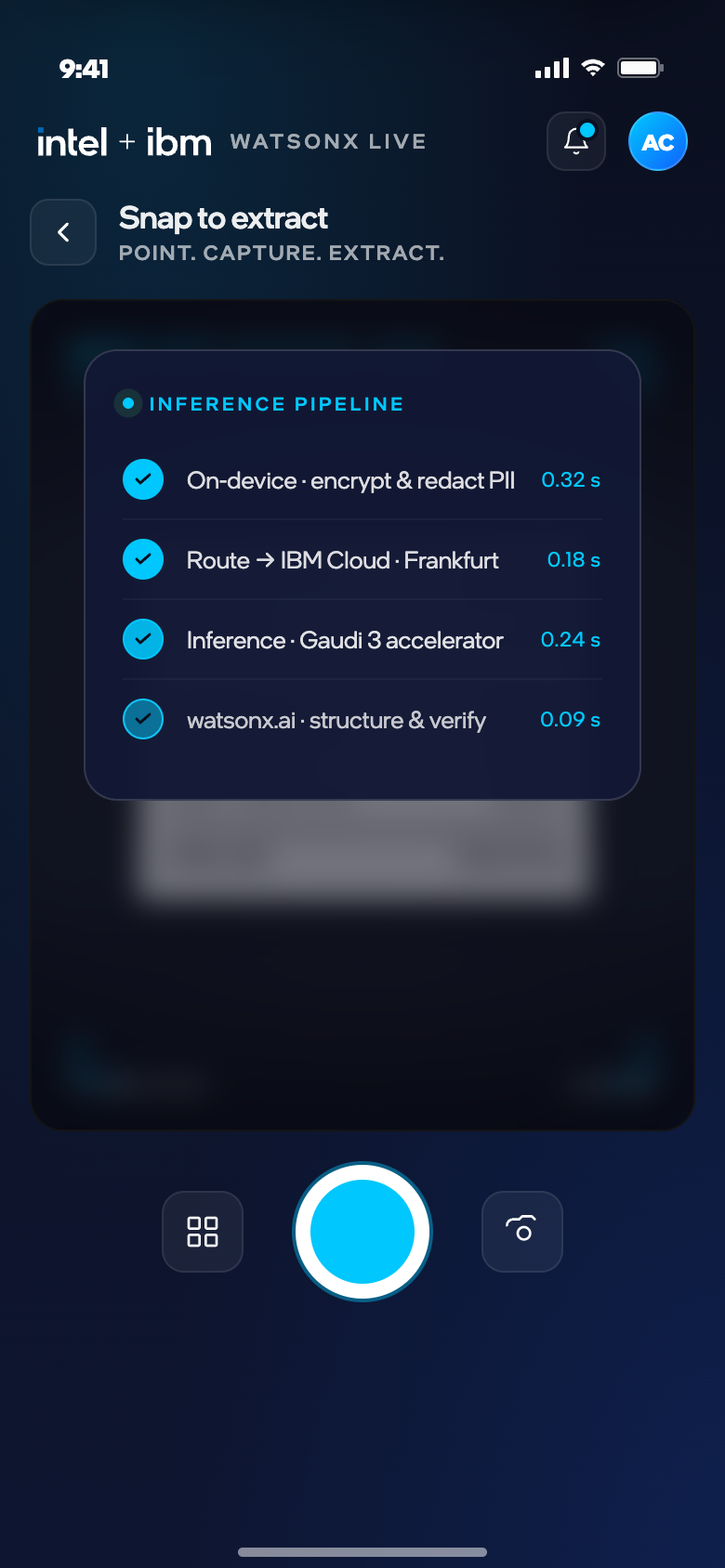
A partner snaps an invoice; watsonx Live runs four inference steps on-device — extract pixels, classify fields, verify checksums, lock to ledger — and shows each one ticking off with its own millisecond timing. The whole pipeline lands in 0.83 seconds, staccato where the chip-scan sweeps. The model thinking, made visible.
A cyan scanline eases across an exploded-view die at 2.4 seconds, sine-in-out — the simplest physical breathing curve. Floating callouts arrive as the line crosses each tier of silicon. The camera becomes the document; the device disappears into the artifact.
When the room asks Granite a question, two concentric rings expand outward from the mic on a long ease-out, staggered 800ms apart. The interface breathes while the model thinks. Same conviction as the chip-scan; different beat in the page's life.
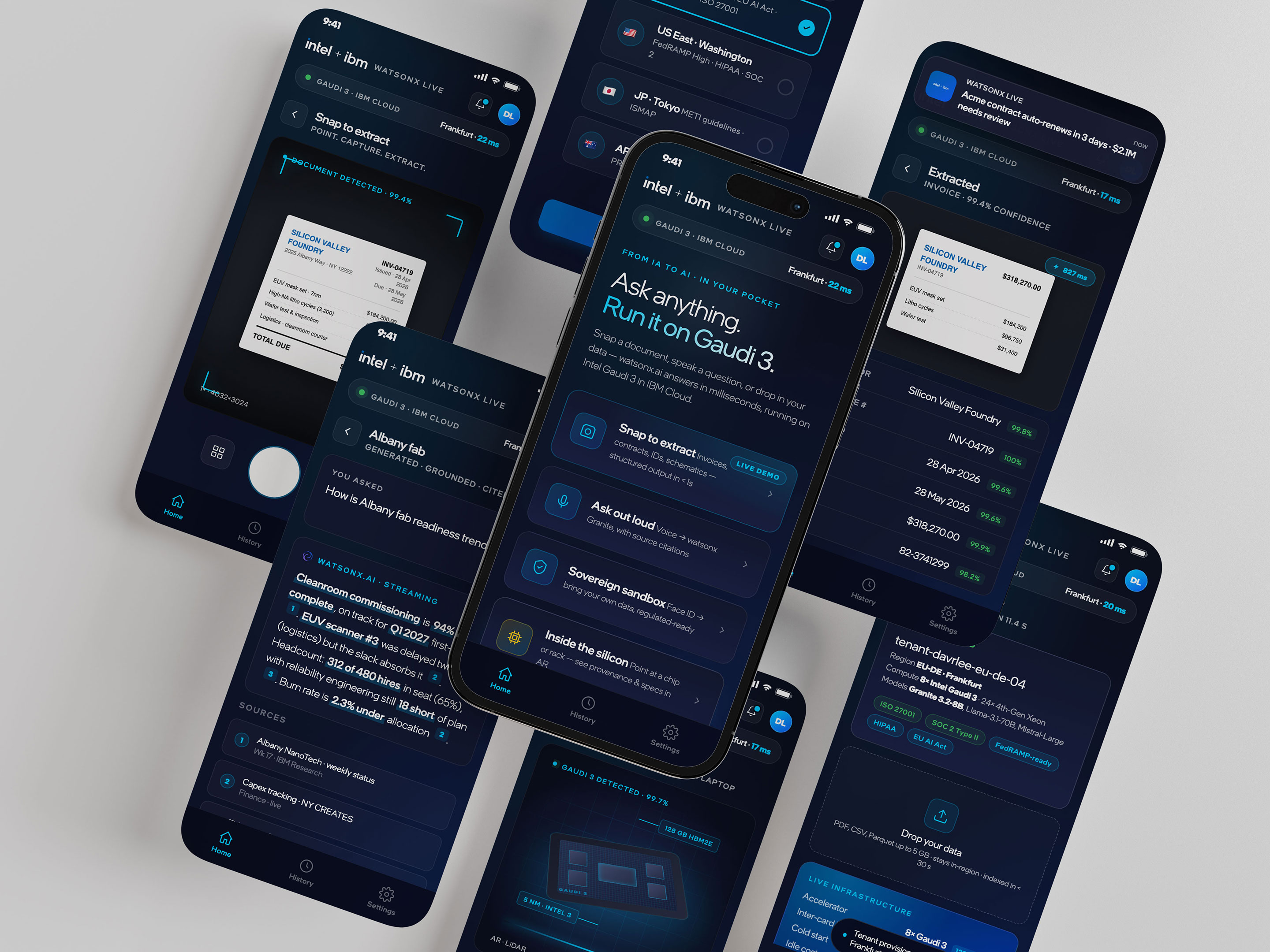
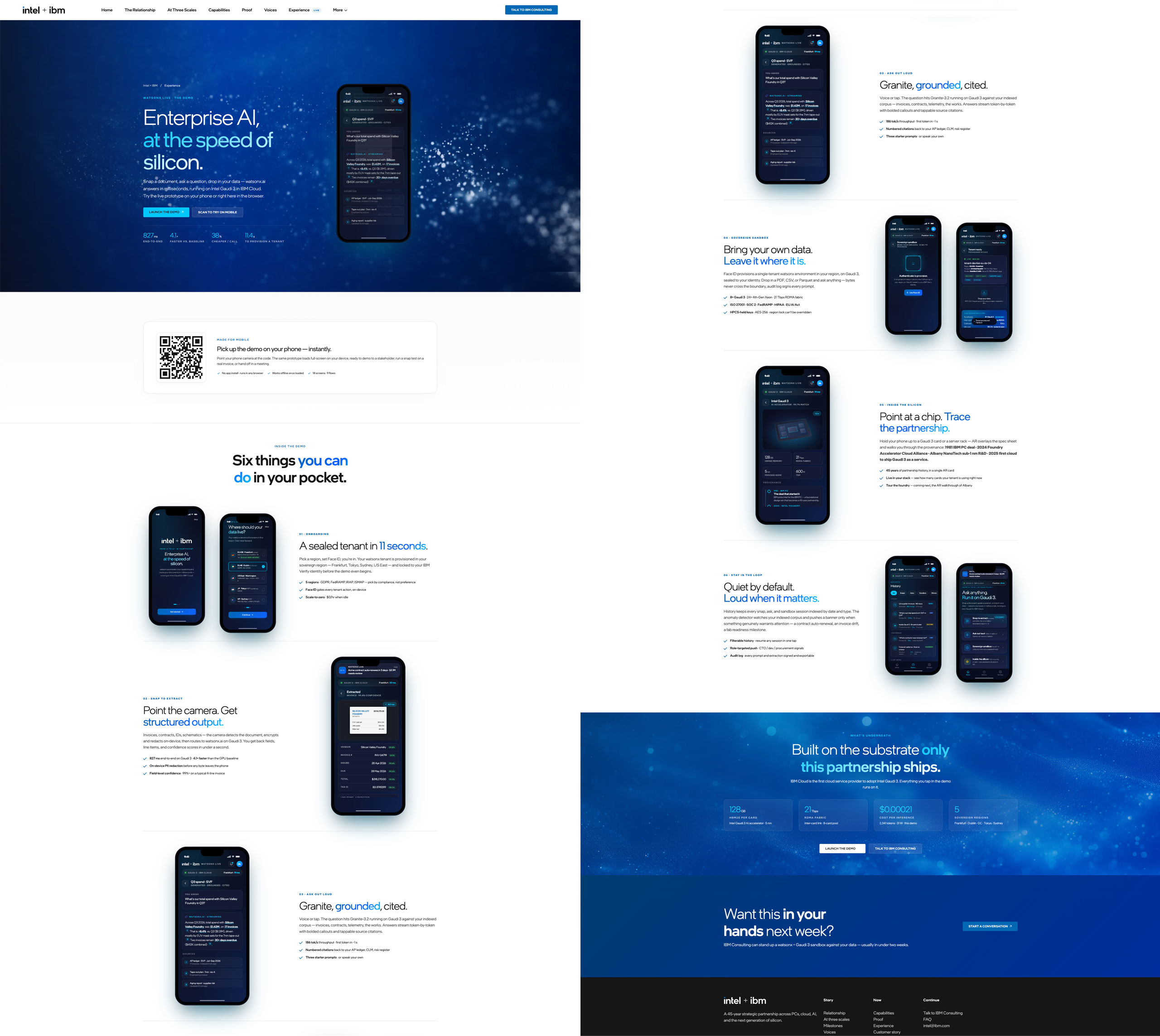
Both surfaces — microsite and 18-screen mobile prototype — are plain HTML, CSS, and JavaScript. No framework, no build step. Every motion choice lives in code a product engineer can read, fork, and extend on day one. Brand-mark lockups, eased transitions, AR scan callouts, the camera-as-document interaction — all expressed as components a product team could lift directly into a production watsonx-class application.
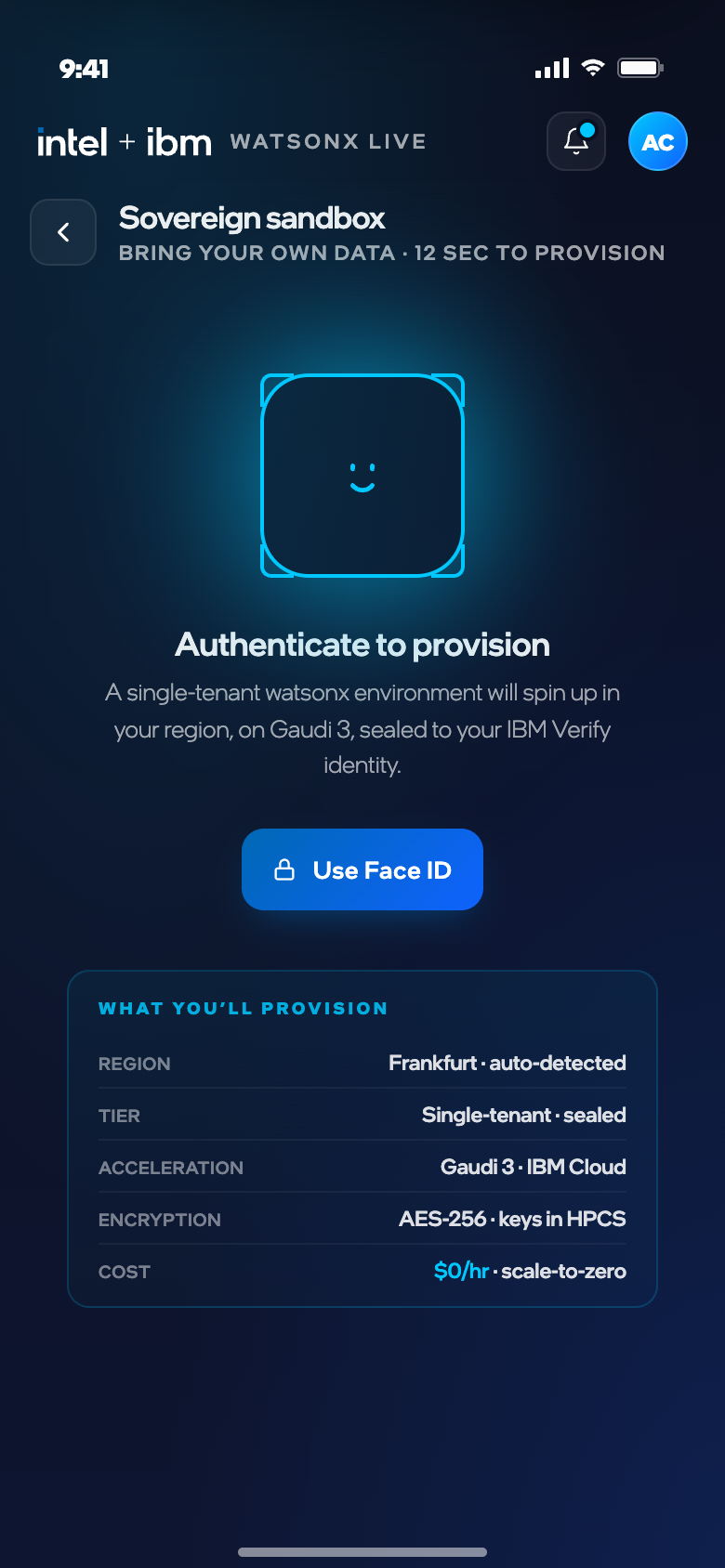
Eighteen rendered screens across nine flows — from onboarding through the camera scans to the sandbox and the partnership history. Each tile opens the rendered screen.
The prototype is the spec.
Every capability is a three-beat process the partner runs on a phone: input arrives, motion stages the work, the verdict lands.
Same easing family across all four — the choreography differs, the breath holds.
Each row reads left → right as one ritual unfolding.
A folder of source articles became a forty-five-year partnership chronology. I gathered the corpus; Claude surfaced the patterns across it and proposed the order — and that sequence became the spine of the microsite. The same brief-and-review loop ran on the motion: the signature beats were re-timed across repeated passes, each one narrowing the choreography until it read as a decision rather than a default. AI as the design partner you brief on intent and review for craft — accelerant, not author.
Corpus in, chronology out.